Showing posts with label Sir Nicholas Pevsner. Show all posts

Wednesday, July 27, 2011

Tube Heritage


St John's Wood Station - The signs say "Bakerloo Line" because originally it was on the Stanmore Branch of the Bakerloo Line which joined the other branch at Baker Street.


St John's Wood escalators 1939


Arnos Grove Station

Sixteen Tube stations were today granted Grade II listed status to protect their architectural heritage. The stations include Oxford Circus, Covent Garden, Aldwych and St John's Wood. The grading will protect station facades, including 100-year-old ornate tiling and brickwork, but allow internal changes for safety measures. Simon Thurley, English Heritage chief executive, said: "They are as valuable to London's architectural story as many more famous buildings like the Houses of Parliament."

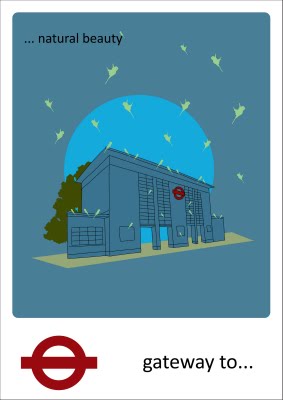


Sudbury Town station

The stations include several designed by Leslie Green and have historic and architectural significance, illustrating the development of the capital's transport system as well as pioneering the use of a strong image which is recognised around the world.


Cockfosters Station

The stations given Grade II status are:

• Aldwych
• Belsize Park
• Brent Cross
• Caledonian Road


Caledonian Road

• Chalk Farm
• Chesham
• Covent Garden
• Hendon Central
• Oxford Circus
(originally two separate stations on the north-west corner of Argyll Street and Oxford Street, and the north-east corner of Argyll Street and Oxford Street including the office above)


• Perivale
• Redbridge
• Russell Square
• St John's Wood
• West Acton
• Wood Green


Three other stations have had their listing upgraded from Grade II to Grade II*. They are:

• Arnos Grove
• Oakwood
• Sudbury Town


The listed stations include several of the tube stations designed by Leslie Green whose ‘ox-blood’ red tile facades, pioneered the use of a strong and consistent corporate image that’s recognised around the world. All the stations have historic and architectural significance, illustrating the development of the capital’s Underground system.


Arnos Grove ticket hall with Passimeter


Escalators with bronze uplighters

The Directors of London Underground in the 20s and 30s saw good design as good for business. By the example it set under Frank Pick the Underground was gradually able to change the public’s attitude to railway stations which had been seen as shabby and inhospitable places. Sir Nicholas Pevsner wrote that Pick saw in every detail a “visual propaganda” and he used this not only to improve the Underground but the environment as a whole. Charles Holden brought the Underground station to the forefront of modern architecture: This achievement is unequalled by any other transport company before or since.

As the Guardian Newspaper's Architectural correspondent (and former London Transport management trainee) Jonathan Glancey observed;

“The first of Charles Holden's tube stations for Frank Pick was Sudbury Town, on the Piccadilly line, opened in 1931. There had been nothing like this distinctly modern yet well-crafted building in Britain before. With typical modesty, Holden, a retiring, teetotal, vegetarian Quaker draper's son from Bolton, Lancashire, chose to describe his first modern masterpiece as "a brick box with a concrete lid. Possibly, just possibly, Holden meant something more.


I can't help thinking that this truly great and still under-rated English architect was thinking of Inigo Jones (1573-1652), who had instigated a revolution in British architecture in the reign of James I when he designed the country's first truly classical buildings. When his client Francis Russell, Earl of Bedford, asked Jones to add a chapel "as cheap as a barn" to his smart residential development built around the new Covent Garden piazza, the architect replied "then you shall have the handsomest barn in England". Sudbury Town station is surely transport design's equivalent of St Paul's, Covent Garden.”


Covent Garden Station 1907

“Tube stations are great examples of the capital’s hidden heritage,” said Heritage Minister John Penrose. “Although listing does not mean these stations will remain unchanged for all time, it does mean that any redevelopment plans will have to take the sites’ heritage value into account, which seems entirely right and will ensure the best of design is preserved for the future.”


55, Broadway - London Underground's iconic HQ built in 1929 in the "airspace" above St. James's Park Station

For more on the architect Charles Holden see;

http://daithaic.blogspot.com/2010/11/holden-goes-underground.html


For more on London Underground’s Grade 1 listed iconic HQ, 55, Broadway, see;

http://daithaic.blogspot.com/2008/04/give-my-regards-to-55-broadway.html

For the history of London Underground and one of the world’s Great Railway Journeys see;

http://daithaic.blogspot.com/2008/01/great-circle-line-journey.html


Though we take it for granted, and frequently curse it to high heaven, the London Underground is a wonder. The Tube network is the oldest and longest underground railway system serving a major city. Its history goes back to 1863, its conception even earlier.

http://daithaic.blogspot.com/2009/10/londons-wunderground.html


Aldwych Tube Station with the tiling showing the original name "Strand"

People in London also used tube stations during the Blitz. They would buy a platform tickets and camp on the platforms for the night. Sheltering in the tube was popular because it was dry, warm and quiet down there. The government was afraid that the overcrowded platforms would disrupt the movement of troops and tried to stop the public from using the tube stations as shelters. The people refused to give them up and the government was forced to back down. In some cases underground stations were closed down and given over to the public to use during air raids.

For the unique place which is Aldwych Tube Station and its role in the Blitz see;

http://daithaic.blogspot.com/2010/11/blitz-on-underground.html

For more see ARCHIBLOGS, TUBE BLOGS and TRANSPORT BLOGS in the Blog sidebar >>>>>

Tube Heritage


St John's Wood Station - The signs say "Bakerloo Line" because originally it was on the Stanmore Branch of the Bakerloo Line which joined the other branch at Baker Street.


St John's Wood escalators 1939


Arnos Grove Station

Sixteen Tube stations were today granted Grade II listed status to protect their architectural heritage. The stations include Oxford Circus, Covent Garden, Aldwych and St John's Wood. The grading will protect station facades, including 100-year-old ornate tiling and brickwork, but allow internal changes for safety measures. Simon Thurley, English Heritage chief executive, said: "They are as valuable to London's architectural story as many more famous buildings like the Houses of Parliament."


Sudbury Town station

The stations include several designed by Leslie Green and have historic and architectural significance, illustrating the development of the capital's transport system as well as pioneering the use of a strong image which is recognised around the world.


Cockfosters Station

The stations given Grade II status are:

• Aldwych
• Belsize Park
• Brent Cross
• Caledonian Road


Caledonian Road

• Chalk Farm
• Chesham
• Covent Garden
• Hendon Central
• Oxford Circus
(originally two separate stations on the north-west corner of Argyll Street and Oxford Street, and the north-east corner of Argyll Street and Oxford Street including the office above)


• Perivale
• Redbridge
• Russell Square
• St John's Wood
• West Acton
• Wood Green


Three other stations have had their listing upgraded from Grade II to Grade II*. They are:

• Arnos Grove
• Oakwood
• Sudbury Town


The listed stations include several of the tube stations designed by Leslie Green whose ‘ox-blood’ red tile facades, pioneered the use of a strong and consistent corporate image that’s recognised around the world. All the stations have historic and architectural significance, illustrating the development of the capital’s Underground system.


Arnos Grove ticket hall with Passimeter


Escalators with bronze uplighters

The Directors of London Underground in the 20s and 30s saw good design as good for business. By the example it set under Frank Pick the Underground was gradually able to change the public’s attitude to railway stations which had been seen as shabby and inhospitable places. Sir Nicholas Pevsner wrote that Pick saw in every detail a “visual propaganda” and he used this not only to improve the Underground but the environment as a whole. Charles Holden brought the Underground station to the forefront of modern architecture: This achievement is unequalled by any other transport company before or since.

As the Guardian Newspaper's Architectural correspondent (and former London Transport management trainee) Jonathan Glancey observed;

“The first of Charles Holden's tube stations for Frank Pick was Sudbury Town, on the Piccadilly line, opened in 1931. There had been nothing like this distinctly modern yet well-crafted building in Britain before. With typical modesty, Holden, a retiring, teetotal, vegetarian Quaker draper's son from Bolton, Lancashire, chose to describe his first modern masterpiece as "a brick box with a concrete lid. Possibly, just possibly, Holden meant something more.


I can't help thinking that this truly great and still under-rated English architect was thinking of Inigo Jones (1573-1652), who had instigated a revolution in British architecture in the reign of James I when he designed the country's first truly classical buildings. When his client Francis Russell, Earl of Bedford, asked Jones to add a chapel "as cheap as a barn" to his smart residential development built around the new Covent Garden piazza, the architect replied "then you shall have the handsomest barn in England". Sudbury Town station is surely transport design's equivalent of St Paul's, Covent Garden.”


Covent Garden Station 1907

“Tube stations are great examples of the capital’s hidden heritage,” said Heritage Minister John Penrose. “Although listing does not mean these stations will remain unchanged for all time, it does mean that any redevelopment plans will have to take the sites’ heritage value into account, which seems entirely right and will ensure the best of design is preserved for the future.”


55, Broadway - London Underground's iconic HQ built in 1929 in the "airspace" above St. James's Park Station

For more on the architect Charles Holden see;

http://daithaic.blogspot.com/2010/11/holden-goes-underground.html


For more on London Underground’s Grade 1 listed iconic HQ, 55, Broadway, see;

http://daithaic.blogspot.com/2008/04/give-my-regards-to-55-broadway.html

For the history of London Underground and one of the world’s Great Railway Journeys see;

http://daithaic.blogspot.com/2008/01/great-circle-line-journey.html


Though we take it for granted, and frequently curse it to high heaven, the London Underground is a wonder. The Tube network is the oldest and longest underground railway system serving a major city. Its history goes back to 1863, its conception even earlier.

http://daithaic.blogspot.com/2009/10/londons-wunderground.html


Aldwych Tube Station with the tiling showing the original name "Strand"

People in London also used tube stations during the Blitz. They would buy a platform tickets and camp on the platforms for the night. Sheltering in the tube was popular because it was dry, warm and quiet down there. The government was afraid that the overcrowded platforms would disrupt the movement of troops and tried to stop the public from using the tube stations as shelters. The people refused to give them up and the government was forced to back down. In some cases underground stations were closed down and given over to the public to use during air raids.

For the unique place which is Aldwych Tube Station and its role in the Blitz see;

http://daithaic.blogspot.com/2010/11/blitz-on-underground.html

For more see ARCHIBLOGS, TUBE BLOGS and TRANSPORT BLOGS in the Blog sidebar >>>>>

Tuesday, November 30, 2010

Holden goes Underground


Poster for the exhibition at Stockwell Station

One of my architectural heroes, Charles Holden - the architect famed for designing many of the iconic '20s and '30s Tube stations - is being celebrated at a free exhibition now showing at the V&A Museum. When using the Tube on a daily basis it is easy to forget its history, and the energy and vision it took to build them. The latest exhibition at the Architecture Gallery will hopefully act as a reminder, whilst revealing the lasting influence of Charles Holden’s work for London Transport.


Charles Holden


Charles Holden's first commission for the Underground this 1924 entrance to Westminster Station. Unfortunately it was demolished in 1999 when the station was rebuilt

This exhibition examines the designs carried out by Charles Holden and his architectural practice, Adams Holden and Pearson, for London Transport, undoubtedly his greatest and most successful patron. The full range of his work, from stations on the Northern line extension and refurbishment of Piccadilly Circus station through to his creation of a new London Underground headquarters at 55 Broadway and his iconic modernist station designs produced for the Piccadilly line extensions is on show. Holden's relationship with London Transport's chief executive, Frank Pick is also investigated as their collaboration and integrated approach to design and architecture was instrumental in shaping London Transport's corporate brand.


Holden's sketch for Highgate Station entrance - later re-named Archway RIBA Drawings Collection

Holden masterminded the design of 20 or so tube stations – those elegant red brick affairs best seen on the northern stretch of the Piccadilly Line. These in particular show off Holden’s principles of ‘total design’. Interiors, light fittings, clocks and tiles – everything in his buildings was crafted to work together harmoniously. Holden deserves to be better known. A contemporary of Charles Rennie Mackintosh, he too produced buildings of great originality, and, unlike his Scottish counterpart, enjoyed a much longer professional career. Stylistically his buildings are difficult to categorise. But large or small, his buildings stand proud, distinguishable from their neighbours by a strong feeling of mass and line.


South Wimbledon Station

As the Guardian Newspaper's Architectural correspondent (and former London Transport management trainee) Jonathan Glancey observed;

“The first of Charles Holden's tube stations for Frank Pick was Sudbury Town, on the Piccadilly line, opened in 1931. There had been nothing like this distinctly modern yet well-crafted building in Britain before. With typical modesty, Holden, a retiring, teetotal, vegetarian Quaker draper's son from Bolton, Lancashire, chose to describe his first modern masterpiece as "a brick box with a concrete lid. Possibly, just possibly, Holden meant something more.

I can't help thinking that this truly great and still under-rated English architect was thinking of Inigo Jones (1573-1652), who had instigated a revolution in British architecture in the reign of James I when he designed the country's first truly classical buildings. When his client Francis Russell, Earl of Bedford, asked Jones to add a chapel "as cheap as a barn" to his smart residential development built around the new Covent Garden piazza, the architect replied "then you shall have the handsomest barn in England". Sudbury Town station is surely transport design's equivalent of St Paul's, Covent Garden.”


Sudbury Town station

Holden is best known for his work for London Underground in the 1920s and 1930s, when his office – Adams, Holden and Pearson – designed a series of underground stations of startling originality, like this at Rayners Lane. These play with basic geometry and volumes, and gain effect from the contrast of forms and materials, not decorative excess. In fact, this drawing of the new Rayners Lane station resembles the architecture itself: both are pared down. People, with their precise shadows, animate the building, not sculpture. Perhaps this architectural purity was regarded as excessive: it has been noted that the main hall of the station should have the addition of windows on either side.


Sketch for Rayners Lane Station


Cockfosters Station

The Directors of London Underground in the 20s and 30s saw good design as good for business. By the example it set under Frank Pick the Underground was gradually able to change the public’s attitude to railway stations which had been seen as shabby and inhospitable places. Sir Nicholas Pevsner wrote that Pick saw in every detail a “visual propaganda” and he used this not only to improve the Underground but the environment as a whole. Charles Holden brought the Underground station to the forefront of modern architecture: This achievement is unequalled by any other transport company before or since.


Ticket Hall with Passimeter


Escalators with bronze uplighters


55, Broadway - London Underground's iconic HQ built in 1929 in the "airspace" above St. James's Park Station

He was not universally admired and his huge complex for London University in Bloomsbury was considered cold by some critics. So much so that George Orwell modelled his Ministry of Truth, in his novel 1984, on Holden's 19 storey Senate House – Orwell's wife worked in the building for the censorship department of the Ministry of Information during WW11. There is a parallel for this as Ian Fleming objected so much to the modernist house the Hungarian architect Erno Goldfinger designed down the road from his house in Willow Road Hampstead that he gave his name to his first Bond villain. In the event Holden’s huge scheme for London University which would have involved buildings set around 17 courtyards was scaled back due to the onset of war.


Senate House. London University

This area around where the exhibition is being hosted at the Victoria and Albert Museum was dubbed by the Victorian press as Albertropolis' a name coined in the 1850s and resurrected in recent years for the 87-acre site south of Hyde Park, purchased by the Royal Commission for the Exhibition of 1851 with profits from the Great Exhibition. Exhibition Road - whose route the 440 yard subway from South Kensington Underground station follows - forms the spine of “Albertropolis”. The nickname satirised the vision of Prince Albert, the Commission's President, of the area as a centre for education, science and art - an ambition largely realised within a few decades of the Prince's death.


See; The Great Circle Line Journey

http://daithaic.blogspot.com/2008/01/great-circle-line-journey.html


The Royal Institute of British Artists (RIBA) and the V&A, with help from London Transport Museum, have pulled together this exhibition from original drawings, photographs, posters, film, journals and models from their extensive collections to tell the story behind Holden's modernist stations, many of which still serve Londoners today. It is well worth catching to understand this prolific and underrated architect who nonetheless has been hugely influential and whose designs have stood the test of time.


'Underground Journeys: Charles Holden's designs for London Transport' runs at the V&A+RIBA Architecture Gallery, V&A in South Kensington until February 13, 2011.

Website;

http://www.vam.ac.uk/exhibitions/index.html

See also;

Give my regards to 55, Broadway

http://daithaic.blogspot.com/2008/04/give-my-regards-to-55-broadway.html

Great British Design Quest

http://daithaic.blogspot.com/2009/01/great-british-design-quest.html

Mapping the World

http://daithaic.blogspot.com/2009/11/mapping-world.html

A night at the Museum

http://daithaic.blogspot.com/2010/01/night-at-museum.html


The Victoria & Albert Museum, South Kensington

For more see ARCHIBLOGS, TUBE BLOGS and TRANSPORT BLOGS in the Blog sidebar >>>>>

Holden goes Underground


Poster for the exhibition at Stockwell Station

One of my architectural heroes, Charles Holden - the architect famed for designing many of the iconic '20s and '30s Tube stations - is being celebrated at a free exhibition now showing at the V&A Museum. When using the Tube on a daily basis it is easy to forget its history, and the energy and vision it took to build them. The latest exhibition at the Architecture Gallery will hopefully act as a reminder, whilst revealing the lasting influence of Charles Holden’s work for London Transport.


Charles Holden


Charles Holden's first commission for the Underground this 1924 entrance to Westminster Station. Unfortunately it was demolished in 1999 when the station was rebuilt

This exhibition examines the designs carried out by Charles Holden and his architectural practice, Adams Holden and Pearson, for London Transport, undoubtedly his greatest and most successful patron. The full range of his work, from stations on the Northern line extension and refurbishment of Piccadilly Circus station through to his creation of a new London Underground headquarters at 55 Broadway and his iconic modernist station designs produced for the Piccadilly line extensions is on show. Holden's relationship with London Transport's chief executive, Frank Pick is also investigated as their collaboration and integrated approach to design and architecture was instrumental in shaping London Transport's corporate brand.


Holden's sketch for Highgate Station entrance - later re-named Archway RIBA Drawings Collection

Holden masterminded the design of 20 or so tube stations – those elegant red brick affairs best seen on the northern stretch of the Piccadilly Line. These in particular show off Holden’s principles of ‘total design’. Interiors, light fittings, clocks and tiles – everything in his buildings was crafted to work together harmoniously. Holden deserves to be better known. A contemporary of Charles Rennie Mackintosh, he too produced buildings of great originality, and, unlike his Scottish counterpart, enjoyed a much longer professional career. Stylistically his buildings are difficult to categorise. But large or small, his buildings stand proud, distinguishable from their neighbours by a strong feeling of mass and line.


South Wimbledon Station

As the Guardian Newspaper's Architectural correspondent (and former London Transport management trainee) Jonathan Glancey observed;

“The first of Charles Holden's tube stations for Frank Pick was Sudbury Town, on the Piccadilly line, opened in 1931. There had been nothing like this distinctly modern yet well-crafted building in Britain before. With typical modesty, Holden, a retiring, teetotal, vegetarian Quaker draper's son from Bolton, Lancashire, chose to describe his first modern masterpiece as "a brick box with a concrete lid. Possibly, just possibly, Holden meant something more.

I can't help thinking that this truly great and still under-rated English architect was thinking of Inigo Jones (1573-1652), who had instigated a revolution in British architecture in the reign of James I when he designed the country's first truly classical buildings. When his client Francis Russell, Earl of Bedford, asked Jones to add a chapel "as cheap as a barn" to his smart residential development built around the new Covent Garden piazza, the architect replied "then you shall have the handsomest barn in England". Sudbury Town station is surely transport design's equivalent of St Paul's, Covent Garden.”


Sudbury Town station

Holden is best known for his work for London Underground in the 1920s and 1930s, when his office – Adams, Holden and Pearson – designed a series of underground stations of startling originality, like this at Rayners Lane. These play with basic geometry and volumes, and gain effect from the contrast of forms and materials, not decorative excess. In fact, this drawing of the new Rayners Lane station resembles the architecture itself: both are pared down. People, with their precise shadows, animate the building, not sculpture. Perhaps this architectural purity was regarded as excessive: it has been noted that the main hall of the station should have the addition of windows on either side.


Sketch for Rayners Lane Station


Cockfosters Station

The Directors of London Underground in the 20s and 30s saw good design as good for business. By the example it set under Frank Pick the Underground was gradually able to change the public’s attitude to railway stations which had been seen as shabby and inhospitable places. Sir Nicholas Pevsner wrote that Pick saw in every detail a “visual propaganda” and he used this not only to improve the Underground but the environment as a whole. Charles Holden brought the Underground station to the forefront of modern architecture: This achievement is unequalled by any other transport company before or since.


Ticket Hall with Passimeter


Escalators with bronze uplighters


55, Broadway - London Underground's iconic HQ built in 1929 in the "airspace" above St. James's Park Station

He was not universally admired and his huge complex for London University in Bloomsbury was considered cold by some critics. So much so that George Orwell modelled his Ministry of Truth, in his novel 1984, on Holden's 19 storey Senate House – Orwell's wife worked in the building for the censorship department of the Ministry of Information during WW11. There is a parallel for this as Ian Fleming objected so much to the modernist house the Hungarian architect Erno Goldfinger designed down the road from his house in Willow Road Hampstead that he gave his name to his first Bond villain. In the event Holden’s huge scheme for London University which would have involved buildings set around 17 courtyards was scaled back due to the onset of war.


Senate House. London University

This area around where the exhibition is being hosted at the Victoria and Albert Museum was dubbed by the Victorian press as Albertropolis' a name coined in the 1850s and resurrected in recent years for the 87-acre site south of Hyde Park, purchased by the Royal Commission for the Exhibition of 1851 with profits from the Great Exhibition. Exhibition Road - whose route the 440 yard subway from South Kensington Underground station follows - forms the spine of “Albertropolis”. The nickname satirised the vision of Prince Albert, the Commission's President, of the area as a centre for education, science and art - an ambition largely realised within a few decades of the Prince's death.


See; The Great Circle Line Journey

http://daithaic.blogspot.com/2008/01/great-circle-line-journey.html


The Royal Institute of British Artists (RIBA) and the V&A, with help from London Transport Museum, have pulled together this exhibition from original drawings, photographs, posters, film, journals and models from their extensive collections to tell the story behind Holden's modernist stations, many of which still serve Londoners today. It is well worth catching to understand this prolific and underrated architect who nonetheless has been hugely influential and whose designs have stood the test of time.


'Underground Journeys: Charles Holden's designs for London Transport' runs at the V&A+RIBA Architecture Gallery, V&A in South Kensington until February 13, 2011.

Website;

http://www.vam.ac.uk/exhibitions/index.html

See also;

Give my regards to 55, Broadway

http://daithaic.blogspot.com/2008/04/give-my-regards-to-55-broadway.html

Great British Design Quest

http://daithaic.blogspot.com/2009/01/great-british-design-quest.html

Mapping the World

http://daithaic.blogspot.com/2009/11/mapping-world.html

A night at the Museum

http://daithaic.blogspot.com/2010/01/night-at-museum.html


The Victoria & Albert Museum, South Kensington

For more see ARCHIBLOGS, TUBE BLOGS and TRANSPORT BLOGS in the Blog sidebar >>>>>